
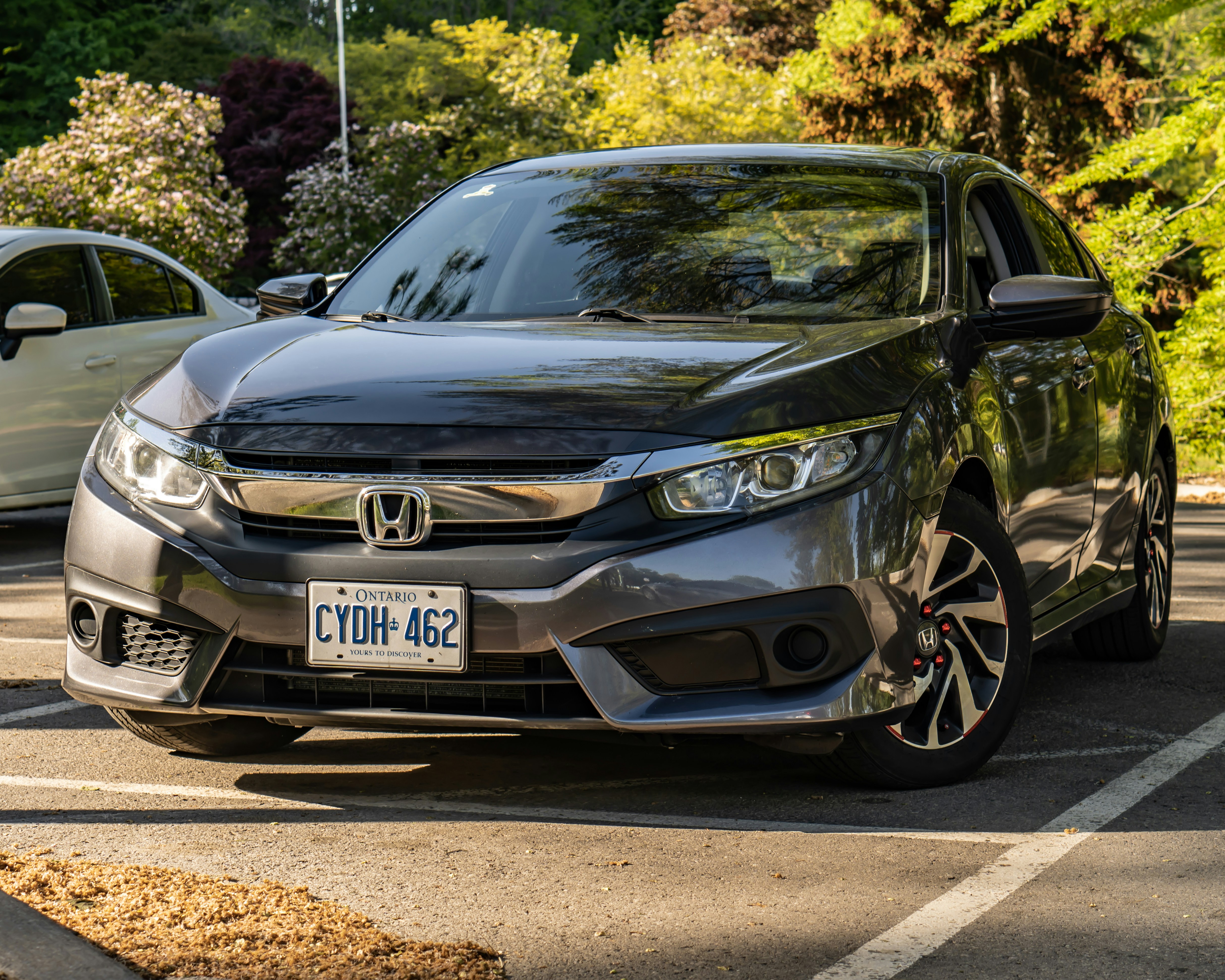
Selling your car in Ontario isn't particularly complicated, but there are a few things you'll want to take care of before handing over the keys.
If you're selling privately, you'll need to understand the Used Vehicle Information Package (UVIP), prepare the ownership documents and make sure the transfer is completed properly. Selling directly to a dealership is generally simpler, but you'll still want to understand the offer and make sure any outstanding loan is dealt with.
And before you accept the first price you're offered, it may be worth finding out what other dealerships are prepared to pay.
Here's how the process works in Ontario.
First, decide how you want to sell
Most Ontario vehicle owners have three options.
Sell privately. You advertise the vehicle yourself, deal with potential buyers and negotiate the price. You may get more money, but you'll be responsible for managing the sale and paperwork.
Sell directly to a dealership. A dealer purchases your vehicle, even if you aren't buying another one. This can be a convenient option if you want to avoid arranging private viewings and test drives.
Trade it in. If you're buying another vehicle, you can put the value of your current car toward the next purchase. In Ontario, a qualifying trade-in can also reduce the amount of the replacement vehicle's price subject to HST.
If you're not sure which route makes sense, get a few dealer offers first. You'll have something concrete to compare against a potential private sale price.
1. Find out what your car is worth
Before you start negotiating, get a reasonable idea of what similar vehicles are selling for.
Look at cars with the same model year, trim, kilometres and general condition. Pay attention to where they're being advertised, too. The market in the Greater Toronto Area may look different from the market in Ottawa, Windsor or Northern Ontario.
Canadian Black Book and CARFAX Canada are useful starting points for vehicle valuations. Online listings can help you see what sellers are asking, although advertised prices aren't necessarily what buyers end up paying.
Remember that a dealership's purchase offer may be lower than the retail price you see online. The dealer has to account for the cost of preparing and reselling the vehicle.
Getting more than one offer is a good way to see how different buyers value the same car.
2. Understand the Used Vehicle Information Package (UVIP)
If you're selling your car privately in Ontario, the UVIP is one of the most important documents you'll need.
The Ontario government requires private sellers to provide a Used Vehicle Information Package to the buyer. It contains information about the vehicle, including:
-
Year, make, model and other identifying details.
-
Ontario registration history.
-
Previous registered owners and their municipalities.
-
Recorded odometer information.
-
Available lien information.
-
The vehicle's wholesale value used for certain tax calculations.
The package helps the buyer understand the vehicle's Ontario history and whether money may be owing against it.
You can order a UVIP through the Ontario government website.
What if you're selling to a dealership?
A UVIP is generally not required when selling to a registered used vehicle dealer. The exemption is important because the paperwork for a private sale is different from a dealer purchase.
If you're selling privately, don't leave the UVIP until the last minute. Have it ready before finalizing the transaction.
3. Get your ownership and vehicle details ready
Before completing a sale, check that the information on your vehicle permit matches the vehicle itself.
Pay particular attention to the VIN (Vehicle Identification Number). It should match the number shown on the ownership document.
You'll also want to have:
-
Your vehicle permit (ownership).
-
Your driver's identification.
-
Service records and repair receipts, if available.
-
The current odometer reading.
-
Both sets of keys, if you have them.
-
Details of any outstanding financing.
If the vehicle has a loan or registered lien, contact your lender before agreeing to a sale. The buyer needs to know that the debt will be handled properly.
4. Do you need a Safety Standards Certificate?
This is a question that comes up frequently when selling a used car in Ontario.
A Safety Standards Certificate (SSC) confirms that a vehicle met Ontario's minimum safety standards at the time it was inspected. It is issued by an authorized inspection station after the vehicle passes the required inspection.
A certificate is generally needed to register a used vehicle as fit for road use, but you don't automatically have to obtain one just to sell a vehicle privately.
You can agree to sell a vehicle as is, without providing a current Safety Standards Certificate. However, the buyer will need to understand that the vehicle cannot be registered as fit until the applicable safety requirements are met.
If you agree to provide a certificate, arrange an inspection through a licensed inspection station. Don't describe the vehicle as certified unless you have a valid certificate.
You can find more information through the Ontario DriveON program.
5. Complete the Bill of Sale and ownership transfer
When you sell privately, you and the buyer need to complete the paperwork properly.
The Bill of Sale should include:
-
Vehicle Identification Number (VIN).
-
Make, model and year.
-
Purchase price.
-
Date of sale.
-
Your name and address.
-
Buyer's name and address.
-
Signatures of both parties.
The Ontario government also requires the vehicle portion of the ownership permit to be completed and signed for the transfer.
Keep copies of the documents for your records.
The buyer is responsible for registering the vehicle in their name at ServiceOntario. Ontario requires the new owner to register the vehicle within six days of purchase.
For the full list of requirements, see the Ontario government's guide to buying or selling a used vehicle.
6. Remember: your licence plates stay with you
This is an easy detail to overlook if you haven't sold a vehicle in Ontario before.
Your licence plates belong to you, not the vehicle. Remove them before handing over the car.
You can keep them to register on another vehicle or return them to ServiceOntario if you no longer need them.
Don't let a buyer drive away with your plates still attached. The buyer will need to arrange the appropriate registration and plates before driving the vehicle.
7. What happens to the sales tax?
If you're selling privately, the buyer generally pays Ontario's 13% retail sales tax when registering the vehicle.
The tax is generally calculated using the purchase price or the vehicle's wholesale value, whichever is greater. Certain exemptions and special situations apply.
If you're trading in a vehicle at a dealership, the calculation is different.
For a qualifying trade-in, HST is generally applied to the difference between the purchase price of the replacement vehicle and the trade-in allowance.
For example:
| Item | Amount |
|---|---|
| Replacement vehicle price | $35,000 |
| Trade-in allowance | $15,000 |
| Amount subject to HST | $20,000 |
| HST at 13% | $2,600 |
Without the qualifying trade-in, HST on the full $35,000 would be $4,550.
In this simplified example, the trade-in reduces the HST by $1,950.
This is one reason it's worth comparing the complete transaction rather than looking only at the trade-in price. Make sure the dealer shows the purchase price, trade-in allowance, taxes and fees separately.
8. Selling a financed vehicle in Ontario
You don't necessarily have to pay off your car loan before looking for a buyer.
However, if there's a lien registered against the vehicle, it needs to be properly dealt with as part of the sale.
Start by contacting your lender and requesting the current payout amount.
For example, if a dealership offers $20,000 and your loan payout is $12,000, you would have $8,000 remaining before any other applicable costs.
If the loan payout is $23,000 and the offer is $20,000, you'll need to cover the $3,000 difference or make another arrangement with your lender.
The UVIP can provide lien information for Ontario registered vehicles, but don't rely on it as your only check. Speak with your lender and confirm how the debt and lien will be settled.
9. Selling to a dealership in Ontario
If you want to avoid managing a private sale, selling directly to a dealership is worth considering.
Many dealerships buy vehicles even when the owner isn't purchasing another one. You can start by providing the VIN, mileage, condition and other vehicle details.
A dealership may then provide an initial estimate or arrange an in person appraisal before making a final offer.
A few things to keep in mind:
-
Ask whether the offer is an outright purchase or a trade-in allowance.
-
Find out whether the offer depends on an inspection.
-
Confirm whether any deductions or fees apply.
-
Ask how an outstanding loan will be paid.
-
Get the agreed purchase price in writing.
Ontario dealerships and salespeople must be registered with the Ontario Motor Vehicle Industry Council (OMVIC). You can use OMVIC's website to learn about dealer registration and consumer protections.
10. Should you get offers from more than one dealership?
Absolutely worth considering.
Two dealerships can look at the same vehicle and arrive at different numbers. One may be looking for your model to fill a gap in its used inventory, while another may already have several similar vehicles available.
If you only contact one dealership, you won't know whether its offer is competitive.
Start with two or three. Give each dealership the same information and ask for an outright purchase offer.
You may find that the numbers are close. Or one dealer may be prepared to pay considerably more.
Either way, you'll have a much clearer picture of what your vehicle is worth to actual buyers.
Frequently asked questions
Do I need a UVIP to sell my car in Ontario?
If you're selling privately, yes. Ontario requires the seller to provide the Used Vehicle Information Package to the buyer. A sale to a registered used vehicle dealer is an exception.
Can I sell my car without a Safety Standards Certificate?
Yes. You can sell a vehicle without a current Safety Standards Certificate, but the buyer needs to understand its condition and the requirements for registering it as fit for road use.
Do I have to remove my licence plates?
Yes. In Ontario, licence plates stay with the owner, not the vehicle. Remove them before handing the vehicle over.
Can I sell my car if I still owe money on it?
Yes, in many situations. The outstanding loan and any registered lien need to be handled correctly. Contact your lender for the current payout amount and instructions.
Does the buyer pay HST when purchasing my used car privately?
In most cases, the buyer pays 13% retail sales tax when registering the vehicle. The amount is generally based on the purchase price or wholesale value, whichever is greater, subject to applicable exemptions and exceptions.
Can I sell my car to a dealership without buying another one?
Yes. Many dealerships purchase vehicles outright. Ask for an outright purchase offer so you can compare it with other offers without tying it to a replacement vehicle purchase.
How do I know if a dealership is legitimate?
Ontario dealers and salespeople must be registered with OMVIC. You can use its online resources to check registration and understand your consumer rights.
Selling in Ontario? Find out what your car is worth first.
Whether you're in Toronto, Mississauga, Brampton, Ottawa, Hamilton, London or somewhere else in Ontario, the first step is the same: understand what your vehicle is worth and find out what buyers are prepared to pay.
You don't have to accept the first number a dealership gives you.
Compare offers, look at the full transaction and decide which option works best for you.
Ready to explore your options?
Visit OutRev to learn more about comparing dealership offers for your vehicle.
This guide covers general vehicle selling requirements in Ontario. Rules and procedures can change, and individual circumstances may differ. Always check current Ontario government guidance before completing your sale.